
Common Terrace Leakage Problems Faced by Homeowners
Learn about common terrace leakage problems faced by homeowners, their causes, warning signs, and effective solutions to prevent long-term water damage.
TERRACE WATERPROOFING
Prakshal Group
1/9/20265 min read
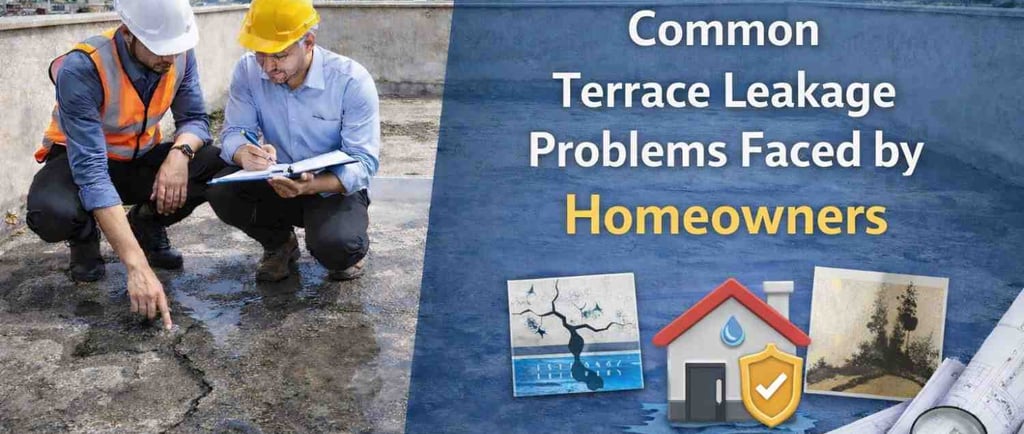
Terrace leakage is one of the most common and frustrating issues faced by homeowners, especially in cities with extreme weather conditions. A terrace is constantly exposed to sunlight, rain, temperature changes, and environmental stress. Over time, even small construction gaps or surface cracks can allow water to seep into the structure, leading to visible damage inside the home.
Many homeowners notice terrace leakage only when ceiling stains, damp walls, or peeling paint appear inside rooms. By the time these signs become visible, the damage has often spread deep into the slab and walls. Understanding the common terrace leakage problems helps homeowners take timely action and prevent long-term structural damage.
Why Terrace Leakage Is a Common Problem in Homes
Terraces act as the first line of defense against weather. Continuous exposure to heat causes concrete expansion, while rainwater penetrates cracks during monsoon. This repeated expansion and contraction weakens the surface and creates multiple entry points for water.
In many cases, terrace leakage is not caused by a single issue but by a combination of poor construction practices, aging materials, improper drainage, and lack of waterproofing maintenance. Ignoring these factors leads to recurring leakage problems year after year.
Cracks in the Terrace Slab
One of the most common terrace leakage problems is cracking of the terrace slab. These cracks may start as hairline fractures due to heat stress, shrinkage of concrete, or structural movement. Over time, rainwater enters these cracks and travels deep into the slab.
Even small cracks can cause significant leakage during heavy rainfall. Water spreads laterally within the concrete and eventually appears as damp patches or dripping ceilings inside the house. Crack-related leakage worsens if waterproofing is absent or poorly applied.
Poor Slope and Water Ponding on Terrace
Improper slope design is a major cause of terrace leakage. When the terrace surface does not have the correct slope, rainwater accumulates instead of draining out quickly. This standing water increases pressure on the terrace surface and forces water into cracks, joints, and weak areas.
Water ponding accelerates deterioration of the terrace surface and reduces the effectiveness of waterproofing layers. Over time, persistent water accumulation leads to leakage, dampness, and structural weakening.
Damaged or Blocked Terrace Drainage Outlets
Terrace drainage outlets play a crucial role in preventing water accumulation. Blocked or damaged outlets cause rainwater to overflow and spread across the terrace surface.
Leaves, dirt, construction debris, and dust often clog drainage pipes, especially before and during monsoon. When water cannot escape efficiently, it finds alternative paths into cracks and joints, resulting in leakage. Poor drainage maintenance is one of the most overlooked terrace leakage problems faced by homeowners.
Weak Parapet Wall and Terrace Joint Waterproofing
Parapet walls and terrace-wall junctions are highly vulnerable to leakage. These joints experience constant stress due to thermal movement and rain exposure. If waterproofing at these junctions is weak or damaged, water easily penetrates inside the structure.
Leakage from parapet walls often shows up as dampness on upper-floor walls rather than direct ceiling leakage, making it difficult to identify the source. Proper joint sealing and parapet waterproofing are essential to prevent this issue.
Aging or Failed Waterproofing Layer
Many homes rely on waterproofing done several years ago. Over time, waterproofing layers degrade due to exposure to heat, UV rays, and rain. Cement-based coatings may become brittle, while low-quality membranes peel or crack.
Once the waterproofing layer fails, the terrace becomes completely exposed to water penetration. Homeowners often assume the problem is minor and apply surface-level fixes, which do not address the underlying failure of the waterproofing system.
Use of Low-Quality Waterproofing Materials
Low-cost waterproofing materials may offer temporary relief but fail under real weather conditions. Inferior materials lack flexibility and UV resistance, making them unsuitable for terraces exposed to extreme heat and rain.
Such materials crack easily and lose adhesion over time. This leads to repeated leakage problems and frequent repair expenses. Choosing the wrong material is a common mistake that results in long-term terrace leakage.
Improper Surface Preparation Before Waterproofing
Even high-quality waterproofing materials fail if the surface is not prepared correctly. Poor surface preparation includes ignoring existing cracks, applying coatings on dusty or damp surfaces, and skipping essential priming steps.
Without proper surface treatment, waterproofing layers do not bond effectively with the terrace slab. This causes peeling, cracking, and early failure, leading to leakage within a short period.
Leakage from Expansion Joints
Expansion joints are designed to accommodate structural movement caused by temperature changes. However, if these joints are not sealed properly, they become major entry points for water.
Leakage through expansion joints often spreads across large areas inside the building. Because joints move continuously, they require flexible waterproofing solutions. Rigid materials fail quickly in these areas, causing recurring leakage problems.
Leakage Affecting Interior Ceilings and Walls
Terrace leakage rarely stays limited to the terrace itself. Water travels through slabs and walls, affecting ceilings, electrical points, and interior finishes. Ceiling leakage is often accompanied by yellow stains, peeling paint, dripping water, and foul odors.
Wall dampness spreads horizontally and vertically, damaging plaster and weakening masonry. Over time, this leads to mold growth, poor indoor air quality, and health concerns for residents.
Mold, Fungus, and Health Issues
One of the most serious consequences of terrace leakage is mold and fungus growth. Damp conditions created by continuous leakage provide an ideal environment for fungal growth.
Mold affects indoor air quality and can cause respiratory problems, allergies, and skin irritation. Homes with persistent dampness become uncomfortable and unhealthy, especially for children and elderly residents.
Electrical Damage Due to Terrace Leakage
Water seepage from terraces can reach concealed electrical wiring and switchboards. Moisture exposure increases the risk of short circuits, power failures, and fire hazards.
Electrical damage caused by terrace leakage is often costly and dangerous. Waterproofing helps protect electrical systems by preventing water entry at the source.
Repeated Temporary Repairs Instead of Permanent Solutions
Many homeowners rely on temporary fixes such as surface sealants, patchwork repairs, or repainting affected areas. While these measures may hide the problem temporarily, they do not stop water penetration.
Repeated temporary repairs increase expenses without solving the root cause. Professional terrace waterproofing addresses the underlying issues and provides long-term protection.
Structural Damage Over Time
Continuous water seepage weakens concrete and corrodes steel reinforcement inside slabs. Rusted steel expands, causing cracks and reducing the load-bearing capacity of the structure.
If left untreated, terrace leakage can lead to serious structural damage that requires extensive and expensive repairs. Early waterproofing prevents such deterioration and preserves the building’s strength.
Importance of Early Detection and Professional Waterproofing
Terrace leakage problems worsen over time if ignored. Early detection through inspection helps identify vulnerable areas before severe damage occurs.
Professional waterproofing involves proper inspection, surface preparation, material selection, and expert application. It ensures durable protection against leakage and weather damage.
Final Thoughts
Terrace leakage is a common yet preventable problem faced by homeowners. Cracks, poor drainage, aging waterproofing, and improper application methods are among the leading causes. Ignoring early signs leads to increased damage, higher repair costs, and compromised living conditions.
Understanding common terrace leakage problems empowers homeowners to take timely action. Investing in professional terrace waterproofing provides long-term protection, structural safety, and peace of mind. Addressing the problem at the terrace level ensures a dry, healthy, and durable home for years to come.
Quality, Integrity & Trust
Prakshal Group provides expert waterproofing solutions with 10+ years of experience and a 10-year warranty on all work. We specialize in terrace, roof, and industrial waterproofing with long-lasting, trusted protection.
Services
Contact
+91-9409406722
© 2025. All rights reserved.
+91-9601166990